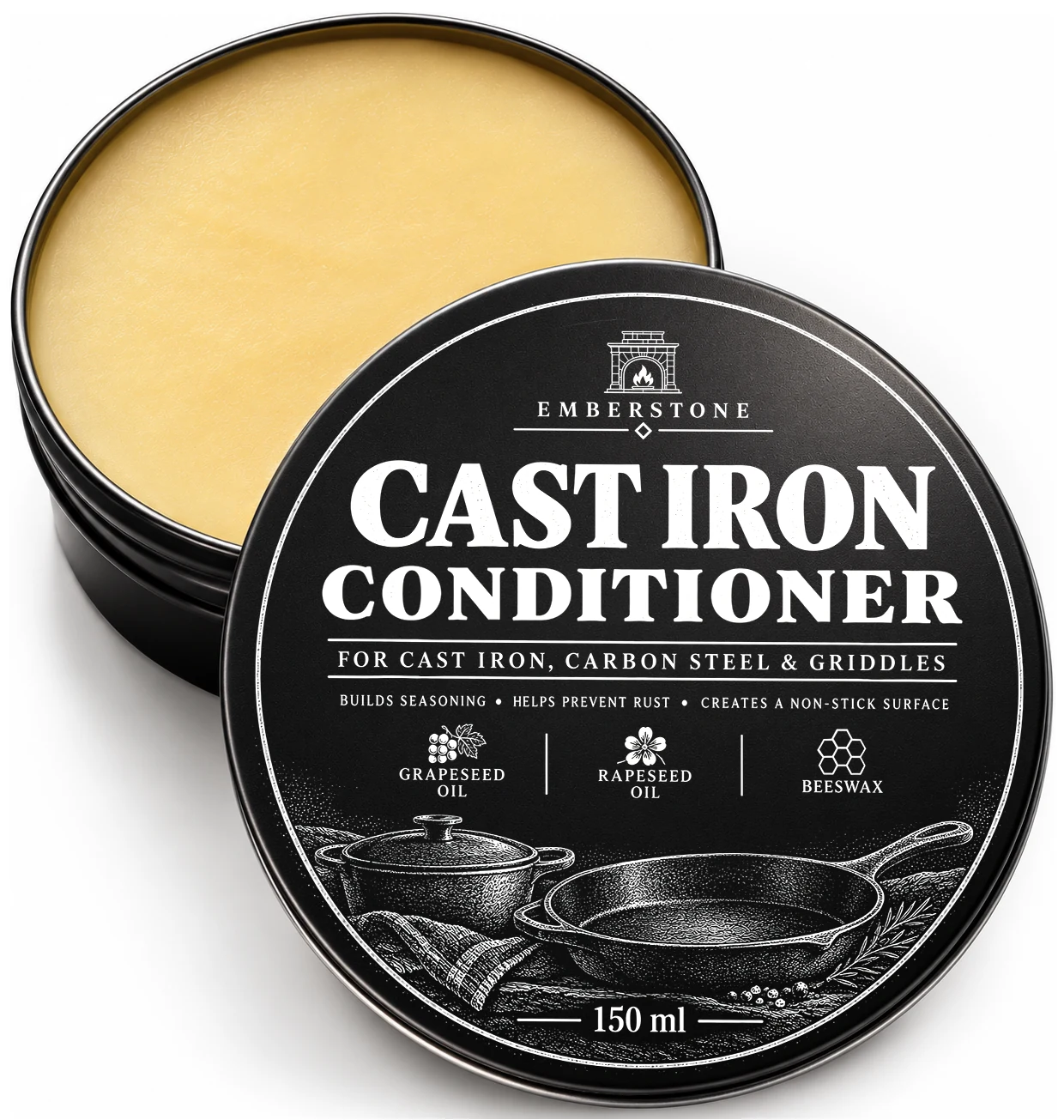
CAST IRON CONDITIONER · CARE GUIDE
A very thin coat.
A pan worth keeping.
Clean, apply very thinly and cure with heat when seasoning is needed. Use the oven method below for suitable oven-safe bare cast iron; check the separate advice for carbon steel.
A GOOD PLACE TO START
Before you begin.
Use only on bare cast iron or carbon steel, not enamel, paint or factory non-stick coatings. Remove existing rust first. Before using the oven method, confirm that the whole pan, including its handle and fittings, is rated for 230°C (about 450°F) for a full hour. If it is not, follow the cookware maker's seasoning method instead. Keep the kitchen well ventilated and use oven gloves for hot cookware.
Clean, dry and remove rust.
Wash away food and residue, remove existing rust using the cookware maker's method, and dry the pan completely. The conditioner does not remove rust.
Begin with a surface that is safe to handle. Keep the product tin and application cloths away from heat.
Apply less than you think.
Rub a very small amount of conditioner over the bare cast-iron surfaces with a lint-free cloth or paper towel. Use another clean section to wipe away the excess until the pan looks almost dry.
An extremely thin film is enough. A glossy, greasy coating can pool and leave a sticky or uneven result.
Oven-safe cast iron: 230°C for one hour.
Preheat the oven to 230°C (about 450°F). Put the prepared pan upside down on the centre rack, with a tray on a lower rack to catch drips. Heat for one hour once the oven is at temperature.
Use this method only when the entire pan is rated for this temperature and duration. Ventilate the kitchen; seasoning can produce smoke. Follow your oven's instructions for rack placement.
Switch off. Let it cool fully.
Turn the oven off and leave the pan inside until completely cool before handling or storing it. Do not try to cool hot cookware quickly with water.
For a stripped pan, repeat a very thin coat if needed once it is cool. Routine cooking and proper cleaning then help maintain the seasoning; a full oven cycle is not needed after every use.
A LITTLE GUIDANCE
Good to know.
Is this a rust remover?
No. Remove rust first, then clean and dry the bare metal before applying conditioner.
Why 230°C and one hour?
This is a general cast-iron oven-seasoning method adapted from cookware-maker guidance, using the lower end of Lodge's 450-500°F range. It is not a measured performance claim or a universal schedule for every pan. Your cookware's temperature and time limits take priority.
Can I use this oven method on carbon steel?
Only if the cookware maker explicitly permits that temperature and duration for the whole pan. Otherwise use their own seasoning method. Some carbon-steel handles are limited to short oven use at lower temperatures.
Why is my pan sticky?
A thick coating is a common cause. Do not put more conditioner over a sticky layer. Remove excess or residue using your pan maker's cleaning guidance, then use a much thinner application.
Do I need to oven-season after every use?
No. For everyday care, clean and dry the pan, wipe on a very light film and remove excess. Store dry. Reserve a full oven-seasoning cycle for when the seasoning needs rebuilding.
Can I use it on enamel or non-stick cookware?
No. The product is for suitable bare cast iron and carbon steel, not enamelled, painted or factory non-stick surfaces.
Need a little guidance? Email info@emberstonecare.co.uk.
Explore Cast Iron Conditioner · All care guides