← All care guides

DRAWER LUBRICANT WAX · CARE GUIDE

How to make wooden drawers slide easier

To help a wooden drawer slide more easily, first check for obstruction, swelling or damage. If the issue is friction on suitable wood-on-wood runners, clean and dry the contact surfaces, patch test and apply a thin film of drawer wax. Wipe away excess, refit safely and check the movement.

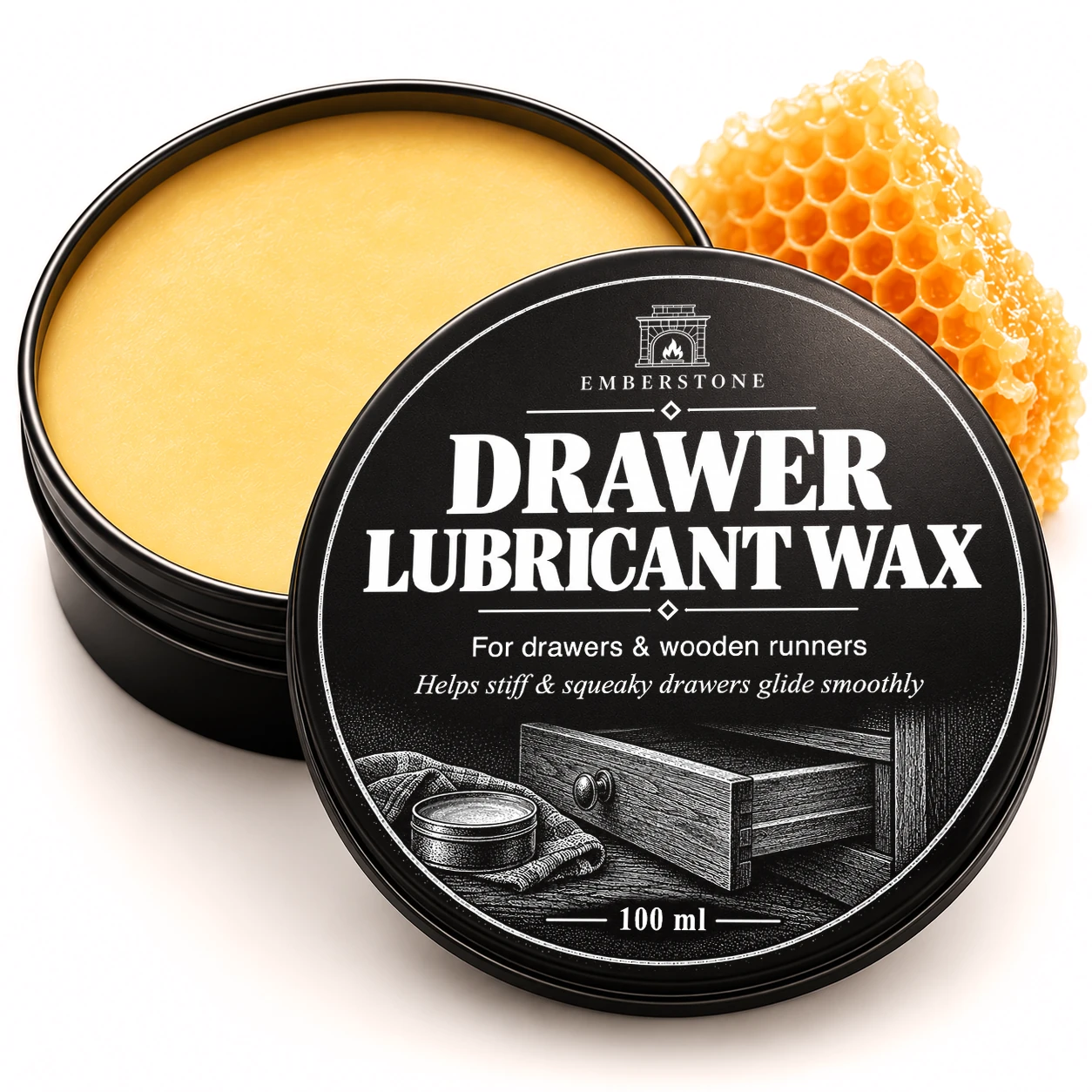
Drawer Lubricant Wax by Emberstone
Drawer Lubricant Wax · 100ml tin

A GOOD PLACE TO START

Before you begin.

Empty the drawer and check the furniture maker’s advice before removing or refitting it. Support the drawer safely. Clear any obstruction and check for loose, swollen or damaged parts. Test a small hidden area and let the surfaces dry before applying wax.

  1. Prepare & test

    Empty the drawer. Clean the wooden contact surfaces, let them dry and test a small hidden area for finish compatibility.

    Remove loose dust and old build-up. Keep the treatment to suitable wooden surfaces; protect nearby fabrics and drawer contents.

  2. Apply a thin film

    Take a little wax on a soft, lint-free cloth. Spread sparingly along the drawer contact edges and fixed wooden runners.

    Find the actual surfaces that slide against each other. Start with a small amount on the cloth; a thick stripe of wax is unnecessary.

  3. Wipe away excess

    Use a clean part of the cloth to remove excess wax. Leave a thin film, without lumps or a heavy coating.

    Check corners and edges for excess. No timed drying or curing interval is specified for this care routine.

  4. Refit & glide

    Refit the drawer correctly and gently open and close it a few times. If it still sticks, check for obstruction, swelling, misalignment or damage.

    Do not force a drawer that still binds. Resolve mechanical problems before adding more wax. Close the tin after use.

A LITTLE KNOW-HOW

Find the cause before waxing a sticking drawer.

Check the drawer before you remove it

Empty the contents and follow the furniture maker’s removal instructions. Support the drawer and check its stops. Look for objects catching behind it, loose parts or a drawer that sits unevenly; these need attention before a lubricant can help.

Find the wooden contact surfaces

Look at where the drawer rests and rubs against its wooden runners or frame. Work on those suitable contact areas rather than coating every visible surface. Keep wax off contents and fittings, and check the finish with a hidden-area test first.

Check movement after a thin application

Wipe away excess, refit the drawer and gently open and close it. If it still binds at the same point or drops out of alignment, stop adding wax and investigate the mechanical cause. Swollen, warped or damaged furniture needs a different solution.
PRACTICAL ANSWERS

Common questions about drawer wax

Can beeswax help sticking wooden drawers?

A wax blend can help suitable wood-on-wood contact surfaces glide when friction is the issue. It will not correct swelling, warped parts, worn runners or an obstruction. Check the furniture and its care instructions first.

Should I wax the inside of the drawer?

For the sliding action, apply sparingly to the suitable runners and contact edges where the drawer rubs. There is no need to coat the storage interior as part of this routine.

Where should I apply it?

Apply sparingly to suitable wooden drawer runners and contact surfaces where wood slides against wood. Follow the product directions and check the furniture maker’s care advice.

What is in the wax?

The blend contains beeswax, carnauba wax and mineral oil.

Should I test it first?

Test a small hidden area for finish compatibility before treating visible or delicate surfaces.

Can it repair a damaged drawer?

It is intended to help wooden contact surfaces glide. Check persistent sticking for obstruction, swelling, misalignment or damage.

Does it also condition wood?

Yes. Alongside helping wooden drawers glide, the blend nourishes and conditions suitable natural wood. Test a hidden area and follow the product directions.

What is included?

One 100ml tin of Emberstone Drawer Lubricant Wax. Cloths, furniture and ingredients shown in the photographs are props and are not included.

Can I use it on metal or ball-bearing runners?

This guide is for suitable wood-on-wood contact surfaces. For metal, plastic, ball-bearing or soft-close mechanisms, follow the furniture or hardware maker’s maintenance instructions.

How often should I reapply?

Check the drawer’s movement and the condition of the contact surfaces. Reapply sparingly when needed, cleaning away accumulated dust and excess first. There is no fixed treatment interval.

Need a little guidance? Email info@emberstonecare.co.uk.
Explore Drawer Lubricant Wax · All care guides